GLP-1 Face, Weight Loss, and Skin Quality: How to Support the Face Without Overfilling
Patients using GLP-1 medications or losing weight quickly may notice facial thinning, mouth-area changes, crepey skin, or less support. This guide explains how Beauty Medica thinks through skin quality, volume, timing, and restraint.
beauty-medica
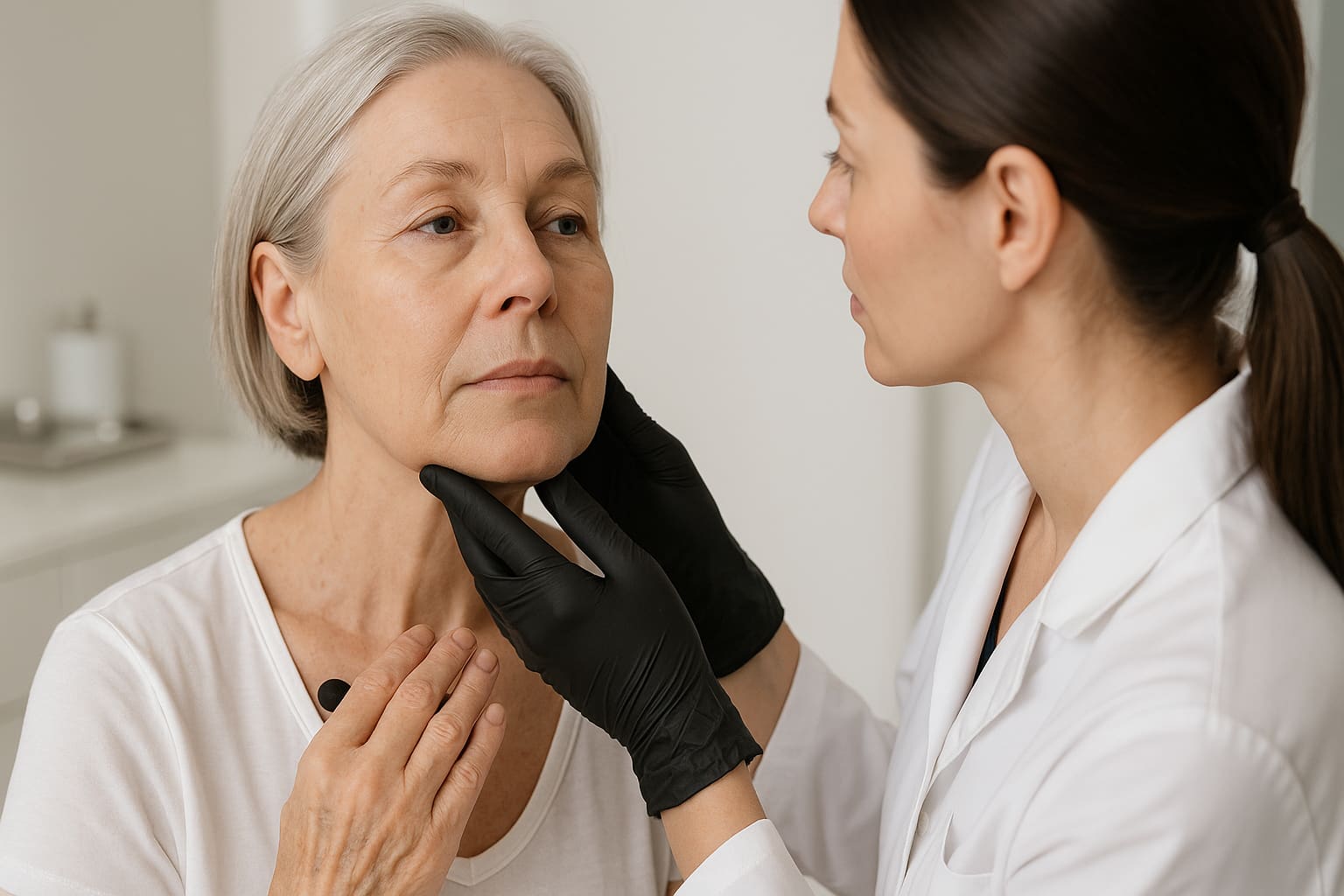
- GLP-1 medications can support significant weight loss, but the face may show volume, skin-quality, and support changes during that process.
- The answer is not automatically lip filler, cheek filler, or filling every hollow.
- Beauty Medica looks separately at facial volume, mouth-area support, skin quality, collagen support, and timing.
- Skin boosters, Gouri, resurfacing, home care, and careful filler can all be relevant, but they solve different problems.
- If weight is still changing, staging may be smarter than doing too much at once.
- Medication questions belong with the prescribing clinician; aesthetic planning focuses on the face, skin, timing, and safety.
Patients using GLP-1 medications, or losing weight for any reason, may notice a face that looks different before they feel ready for treatment.
The words people use are usually practical: my cheeks look flatter, my mouth corners look heavier, my lips look smaller, my skin looks looser, or my face looks tired even though I feel better.
That is the right place to start. You do not need to know whether the answer is filler, Gouri, skin boosters, laser, peels, or home care. The more useful question is: what changed, and what should be supported first?
What people mean by GLP-1 face
“GLP-1 face” is not one diagnosis. It is a shorthand for facial changes people may notice during or after meaningful weight loss.
For some patients, the biggest change is volume. The cheeks, temples, under-eye transition, smile-line area, lips, or lower face may look less supported because facial fat and fullness changed.
For others, the bigger issue is skin quality. The skin may look thinner, drier, crepey, less elastic, or less resilient. Makeup may sit differently. The mouth area may look less smooth. The face may read older because the skin is no longer supported the same way.
Most patients have a mix.
Plain English
What may be changing at the same time
- Facial fullness and fat support may be lower than before.
- The mouth, lips, and smile-line area may look less supported.
- Skin may look thinner, drier, crepey, or less springy.
- Collagen-quality concerns may become more visible.
- Weight may still be changing, which affects timing.
- The best plan may be staged instead of everything at once.
Why the face can change during weight loss
The face has its own structure: bone, muscle, ligaments, fat compartments, skin, and collagen support. When weight changes quickly or meaningfully, facial fullness can change too.
That is not automatically bad. Many patients feel healthier and more confident after weight loss. The aesthetic problem is that the face may reveal the change unevenly.
One patient may lose cheek fullness. Another may notice deeper smile lines. Another may feel the lips and mouth corners look smaller or more tired. Another may see skin laxity, crepey texture, or less glow.
Emerging dermatology and aesthetic literature is also looking at how GLP-1 pathways may relate to skin biology, inflammation, and tissue behavior. That research is still developing. Beauty Medica treats it as a reason to plan carefully, not as a reason to promise that one product can reverse every change.
Do not start by filling every hollow
The most important point is restraint.
If a face has changed after weight loss, the answer is not to chase every shadow with filler. Overfilling can make the face look heavy, puffy, or disconnected from the rest of the person.
It is also not enough to say “just do skin boosters.” Skin boosters may help when the skin looks depleted, crepey, or less resilient, but they do not replace facial support when true volume or structure has changed.
The better approach is to separate the problems.
Decision Filter
What might lead, and what may need to wait
May be part of the plan
- Careful HA filler when support or volume loss is the main issue.
- Skin boosters or Gouri when skin quality, crepiness, or collagen support is the stronger concern.
- Laser, peels, or microneedling when surface texture, pigment, pores, or resurfacing needs are clearer.
- Home care, SPF, retinoids or retinoid alternatives, antioxidants, and barrier support when the skin needs preparation.
May not be first
- Filling every hollow while weight is still changing.
- Treating lips alone when the whole lower face changed.
- Choosing a trendy injection before knowing what is in it and why it fits.
- Doing aggressive resurfacing when the skin barrier needs support first.
What Beauty Medica evaluates first
During consultation, Elena is not only choosing a product. She is sorting the visible change into a safer plan.
The discussion usually looks at:
- Timing: whether weight is stable or still changing.
- Volume: whether cheeks, temples, lips, mouth corners, or lower-face support changed.
- Skin quality: whether the skin looks thin, crepey, dull, dry, or less elastic.
- Collagen support: whether Gouri, skin boosters, microneedling, or resurfacing should be discussed.
- Surface issues: whether pigment, texture, pores, or acne scarring should lead.
- Medical boundaries: whether medication questions should go back to the prescribing clinician.
- Restraint: what should be left alone so the result still looks natural.
That last point matters. The goal is not to make the face look like it never lost weight. The goal is to keep the face balanced, supported, and believable.
Where lips and mouth corners fit
Weight loss can make the mouth area look different. Lips may look flatter. The lip border may look less defined. Smile lines may look deeper. Mouth corners may look more downturned. The lower face may look less supported.
That does not mean every patient needs lip filler.
Sometimes a small lip plan makes sense. Sometimes mouth-corner support matters more. Sometimes cheek or lower-face balance is the missing support. Sometimes skin quality around the mouth needs attention first. Sometimes the safest answer is to wait until weight is more stable.
That is why Beauty Medica now routes this through Lips, Mouth Corners & Facial Plumpness, not a simple “lip filler” page.
Where skin boosters and Gouri fit
Skin boosters are most relevant when the skin itself looks depleted. Patients may describe this as crepey texture, dryness, dullness, thinner-looking skin, or less resilience.
Gouri is one named option Beauty Medica discusses when collagen quality, solar elastosis, crepey texture, or weathered-looking skin is part of the picture. It is not a cheek filler, lip filler, or shortcut for facial volume loss.
This distinction helps patients understand why the plan may include skin support without turning every GLP-1 face concern into filler.
What may help at home
Home care cannot replace lost facial volume, but it can support the skin while the plan is being built.
Depending on your skin, Elena may discuss sunscreen, retinoids or retinoid alternatives, antioxidants, peptides, hydration support, barrier repair, and a realistic maintenance routine. SPF matters because sun damage and collagen-quality decline can make weight-loss-related skin changes look more obvious.
The goal is not to make the routine complicated. The goal is to keep the skin prepared enough that in-office treatment can be chosen more intelligently.
When waiting is the better decision
Waiting can be a real treatment decision.
If weight is still changing quickly, a conservative plan may be safer. If the skin barrier is irritated, home care may need to come first. If the patient is unsure what changed, the consultation may focus on mapping the face and choosing one first step rather than doing everything immediately.
That is not delay for the sake of delay. It is how you avoid overcorrecting a moving target.
The practical takeaway
You should not have to choose between a healthier body and a face that still feels like you.
If weight loss or GLP-1 use changed the way your face looks, start with what you notice: lips, mouth corners, facial plumpness, skin quality, crepey texture, or a face that looks less supported.
Then let the consultation sort the layers. The right plan may involve careful filler, skin boosters, Gouri, resurfacing, home care, waiting, or a staged combination. What matters is that the first step matches the real change instead of chasing a treatment name.
Related treatment pages
Start with Lips, Mouth Corners & Facial Plumpness if the change is around the mouth or facial fullness. Compare Skin Boosters, Gouri, HA Fillers, Skin Quality, and Mesotherapy if you are trying to understand where each option fits.
- FDA. Approval of Zepbound (tirzepatide) for chronic weight management.
- Facial Aging After Glucagon-Like Peptide 1 Receptor Agonist-Induced Weight Loss: A Review and Clinical Considerations. PubMed.
- Radiographic Midfacial Volume Changes in Patients Using Glucagon-Like Peptide-1 Receptor Agonists. PubMed.
- The Role of GLP-1 in Skin Homeostasis and Skin Diseases. PMC.
- Hughes et al. Sunscreen and prevention of skin aging: a randomized trial. Annals of Internal Medicine. 2013.
beauty-medica
Related articles
Continue with another article from this section.

Why Aesthetic Results Depend on Shared Vision, Not Just Products
Why credentials matter for safety, but artistry, listening, proportion, and shared aesthetic vision shape the final result.
Read article
Skin Boosters and Exosomes: What They Are, What They Are Not, and What to Ask First
A practical Skin Quality guide to skin boosters, exosomes, Gouri, Profhilo-style searches, hydration injections, texture, crepey skin, and …
Read article
Your Skincare Routine Did Not Fail. Your Hormonal Environment Changed.
When hormones shift, skin behaves differently in ways your routine no longer addresses. Here is what is actually happening and which clinical …
Read article